

Can AI Replace a Human Adviser?
Artificial intelligence (AI) tools like ChatGPT are increasingly capable of analysing financial data, generating reports, and answering complex questions in seconds. But the real question is: can AI truly replace a human financial adviser?
In this series, ‘Can AI Replace a Human Adviser?’, we examine real-life case studies of clients navigating major life transitions and put AI to the test against a Providend Client Adviser. As these stories unfold, we reveal what AI gets right, what it gets dangerously wrong, and why human advice may still matter more than you think.
Case Study: How to Plan for Someone with Aging Parents?
Marcus (37) is an only child working as a senior consultant at a multinational firm, earning a take-home income of $240,000 a year. He is unmarried and lives with his aging parents in their 70s, in their fully paid HDB flat valued at $900,000. He also has $350,000 in cash savings, $400,000 in diversified investments, and $150,000 in CPF.
He wants to ensure his parents are well cared for as they age while also building his own financial security. He’s thinking about long-term care, potential healthcare costs, and how to manage his personal savings for both his future and his parents’ needs. He feels the pressure of being the sole caregiver and decision-maker for his parents. They are generally healthy but have started to experience early signs of chronic conditions.
He wants to plan for medical coverage, retirement adequacy for himself, and contingencies if his parents’ care needs increase. Emotionally, he feels a mix of responsibility, anxiety, and a desire to balance caring for his parents with his own life and career goals.
His question is: “How can I plan my finances to support my aging parents while ensuring I am building my own security and preparing for major life events?”
To find out, we posed Marcus’s exact situation to ChatGPT and asked it to act as his financial adviser. Our Client Adviser, Sean, reviewed the AI-generated plan, analysed its conclusions, and compared them against what a real human adviser would do. Here is what he found.
What Did ChatGPT Do Well
ChatGPT correctly recognised that Marcus’s question is not simply an investment problem. It is a family decision involving money, health, care, housing and personal responsibility. It raised relevant risks, including long-term care, the possible effect of caregiving on Marcus’s career, the need to discuss his parents’ wishes, and practical arrangements if either parent loses mental capacity.
Its suggestion to separate money by purpose was sensible. Its prompts for beginning a conversation with his parents were empathetic. Most importantly, it gave an overwhelmed person a way to begin.
But a helpful framework is not yet a financial plan. The quality of an AI-generated plan depends on the quality of its instructions, the completeness of its facts, and the user’s ability to recognise when an answer is inaccurate or unsuitable. Without those three things, fluency can easily be mistaken for sound advice.
What Did ChatGPT Fall Short, And Why It Matters
1. It Turned an Unknown Family Need into Marcus’s Financial Obligation
ChatGPT suggested that Marcus reserve 15% to 20% of his assets for his parents’ care. The percentage sounds considered, but the information needed to justify it was missing.
Exhibit 1: Extract from the AI-generated response
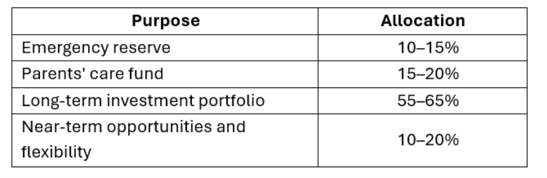
We do not know his parents’ spending, CPF LIFE payouts, cash, investments, bond coupons, stock dividends, insurance coverage, MediSave balances or other retirement income. We do not know whether their current resources can already sustain their retirement, healthcare expectations, and future care needs. We do not even know whether Marcus is expected to fund a shortfall.
This is the central weakness in the AI plan. It treated uncertainty as though it were already Marcus’s responsibility. He could set aside too little and feel falsely reassured. He could also reserve far too much, compromise his own future and carry a burden that his parents already have the means to meet.
Before deciding what Marcus should provide, we first need to establish what his parents can provide for themselves.
2. It Planned Around the Parents, Instead of Planning with Them
Marcus’s parents are not a future expense on his balance sheet. They have their own resources, values, preferences and ideas of what a dignified later life looks like.
Their fully paid HDB flat may be financially significant, but it is first their home. Whether they wish to remain there, right-size or use their housing asset in another way cannot be decided from its market value alone. The same is true of care. Would they prefer to age at home? What support would they accept? What standard of healthcare do they expect? Who do they trust to make decisions if they no longer can?
A plan prepared only from Marcus’s perspective will still rely on assumptions. The more responsible proposal is for his parents to undertake their own planning first, if they are comfortable doing so. Their plan and Marcus’s plan can be prepared separately, while recognising that the family’s decisions are connected.
3. It Offered Breadth Without Enough Professional Judgement
AI is good at generating comprehensive lists. The harder work is deciding which facts are material, which options are still available, which recommendations fit the family, and what should happen first.
For Marcus’s parents, it is not enough to say “review insurance”. At their age and with emerging health conditions, new cover may be limited, costly or subject to underwriting. We need to establish what hospitalisation and long-term care protection already exists, what the policies actually cover, what remains affordable, and which risks must be self-insured through MediSave, cash flow and dedicated reserves.
The same judgement is needed when reviewing Marcus’s investments. The description “diversified” does not tell us whether the portfolio is low cost, globally diversified, appropriately exposed to risk or positioned to give his important goals the highest probability of success. A plausible AI answer may also contain factual errors or apply outdated rules. Unless Marcus already knows the subject well enough to test the response, he may not know where the answer is wrong.
How I Would Advise Marcus and His Family
1. Begin With Ikigai: What Makes Marcus’s Life Worth Living?
At Providend, wealth planning begins with a life decision before a wealth decision. The purpose of an Ikigai discovery is not to ask Marcus for a list of financial goals. It is to understand the life he considers worth living, then align his money to that life.
His concern for his parents is clearly important, but it is not the whole of Marcus. A meaningful discovery conversation would explore the different sources of purpose, joy, belonging and contribution in his life:
- What gives Marcus a sense of meaning and satisfaction in this season of life?
- Which relationships matter most to him, and what does being present for those people look like?
- Does his work energise him, or does he hope for the freedom to slow down, change direction or pursue a personal mission?
- What small joys and experiences would make his life feel like it is worth living, even if they do not look like conventional financial goals?
When Marcus says he wants to care well for his parents, what does that mean to him in practice, and what part of that responsibility do his parents actually want him to carry?
These questions help distinguish Marcus’s non-negotiable goals from assumptions and social expectations. They also reveal the real trade-offs. Money reserved unnecessarily for an undefined parental need may delay a home, a career change, marriage, children, travel or retirement freedom. On the other hand, ignoring a genuine dependency could place both generations at risk.
Once the life Marcus wants is clear, the wealth plan can be designed around it. Risk management protects the life and people that matter to him. Investing gives his non-negotiable goals the highest probability of success. Estate and legacy planning ensure that what he has accumulated is passed on with intention and purpose.
2. Plan for His Parents First, With His Parents
I would encourage Marcus to invite his parents to undertake their own holistic wealth planning, provided they understand the process and are comfortable participating. In some families, the adult child joins the discussions and gains clarity alongside the parents. In others, the child simply makes the introduction and gives the parents space to plan independently.
The principle is the same: the parents remain as the clients in their own plan. Their voice, choices, and dignity come first.
We would assess whether their desired retirement lifestyle can be sustained by CPF LIFE, retirement income plans, cash, investments, dividends, bond coupons and other assets. We would review their healthcare and long-term care protection, MediSave and the reserves needed for costs they may have to self-insure. We would also clarify their housing intentions, care preferences, wills, nominations, Lasting Powers of Attorney and the practical arrangements the family may need later.
This planning can reveal a very different picture from the one Marcus fears. His parents may already have enough. They may need only a modest contingency. Or there may be a genuine gap that requires family support. Some parents may even discover that they have more than enough and wish to transfer part of their wealth to their children while they are alive, when the money may have greater impact than an inheritance received decades later.
The parents’ plan establishes whether Marcus has a financial obligation at all. Marcus’s plan then shows how that obligation can be met without sacrificing his own life.
3. Build Marcus’s Plan on Facts, Not a Vague Sense of Duty
After his parents’ position is clear, we can plan for Marcus separately and connect the two plans where necessary. If his parents are financially independent, Marcus can direct more of his resources towards his own future. If they are partly dependent on him, we can quantify the support required, its likely duration and the risks that could interrupt it.
Risk management comes first. At 37, Marcus’s future earning capacity may be his largest financial asset. We would assess his hospitalisation, critical illness, disability income, and long-term care coverage. If his parents depend on his income, his death coverage must also be sufficient to continue the support he intended to provide, even if he is no longer around. The same thinking applies if illness or disability prevents him from working for an extended period.
We would then examine his cash flow, the purpose of his $350,000 cash balance, his near-term plans, and the structure of his $400,000 portfolio. Money needed for a home, marriage, caregiving, or another major life event in the next few years should remain liquid and appropriately safe. Longer-term money can be invested in low-cost, globally diversified portfolios, with risk calibrated to his willingness, ability, and need to take it.
CPF and SRS decisions should serve this plan rather than lead it. After maintaining sufficient liquidity for near-term commitments and emergencies, Marcus can consider CPF cash top-ups and SRS contributions where they are suitable for his longer-term retirement needs and tax position. SRS money need not remain idle. It can be invested in suitable low-cost, globally diversified vehicles, while recognising the scheme’s withdrawal rules and long investment horizon.
4. Plan the Transfer of Responsibility and Wealth with Intention
Ageing-parent planning is also about decision-making and legacy. The family should be clear about who can act if a parent loses mental capacity, where important documents are kept, how medical and care preferences will be communicated, and whether wills, CPF nominations and other beneficiary arrangements still reflect the parents’ intentions.
Marcus needs the same clarity in his own estate plan. If his parents rely on him, his assets and insurance proceeds should reach the right people in a way that can actually support them. If his life changes through marriage or children, those arrangements must be reviewed. Good estate planning is not merely about distributing assets after death. It is about passing wealth, responsibility and decision-making authority with intention, while reducing confusion for the people left to carry out the plan.
Why Family Planning Creates Clarity and Peace of Mind
A family’s finances are intertwined, but that does not mean they should be collapsed into one plan. Each generation needs its own clarity. The parents need to know whether they can retire with dignity, how care will be funded and what they wish to do with any surplus. Marcus needs to know what support is genuinely required, how to protect that commitment and how much freedom remains for his own future.
This is why the planning sequence matters: parents first, Marcus next, and then a deliberate connection between the two plans. It replaces a potentially unlimited emotional obligation with a defined and manageable commitment. It also gives the family a shared language for conversations that are often postponed until a health crisis forces them to act.
At Providend, our role is to journey with families through these decisions. We are a family serving families. We aim to bring light and clarity to a financial world that can feel complex, especially when money, ageing, health and family responsibility meet in the same conversation.
Conclusion: Plan Early, While the Family Can Decide Together
ChatGPT gave Marcus a thoughtful starting framework. Used well, AI can organise information, surface questions, and help a family prepare for a deeper discussion. But it cannot compensate for missing facts, unclear instructions or a user who has no reliable way to test its conclusions.
For Marcus, the most valuable recommendation is not a percentage allocation. It is an invitation to his parents to plan for themselves while they can still take an active role in the conversation. Once their retirement adequacy, protection, care preferences and legacy intentions are clear, Marcus can build his own plan with far greater confidence and peace of mind.
This is personal for me too. One of the most meaningful gifts I believe I can give my own parents is to plan for their finances in my capacity as a Client Adviser at Providend. I have begun that process with them because I believe in the way Providend approaches retirement planning, including our RetireWell bucketing strategy. I want my parents to know whether their resources can sustain the life they want, and I want our family to make future decisions from clarity rather than urgency.
A conversation Worth Having Early
If your parents are approaching or already in retirement, consider speaking with them about whether they would benefit from a holistic planning process. The decision must be theirs, and it should be one they are comfortable with.
If your family feels that Providend’s planning philosophy aligns with you and would like to explore further, you may reach out to me directly or contact Providend through our main enquiry channel.
This is an original article written by Sean, Client Adviser at Providend, the first fee-only wealth advisory firm in Southeast Asia and a leading wealth advisory firm in Asia.
For more related resources, check out:
1. How to Make Life Decisions (Ikigai Decisions)
2. To Live the Good Life, Make Life Decision First Before Wealth Decisions
3. Here’s Why We Charge a Higher Fee Than Robos
To receive first-hand wealth insights from our team of experts, we invite you to subscribe to our weekly newsletter.
Through deep conversations with our advisers, you will gain clarity on what matters most in life and what needs to be done to live a good life, both financially and non-financially.
We do not charge a fee at the first consultation meeting. If you would like an honest second opinion on your current investment portfolio, financial and/or retirement plan, make an appointment with us today.