


When people think of ikigai, they often picture a neat, four-circle Venn diagram: “what you love,” “what you’re good at,” “what the world needs,” and “what you can get paid for,” with ikigai at the centre.
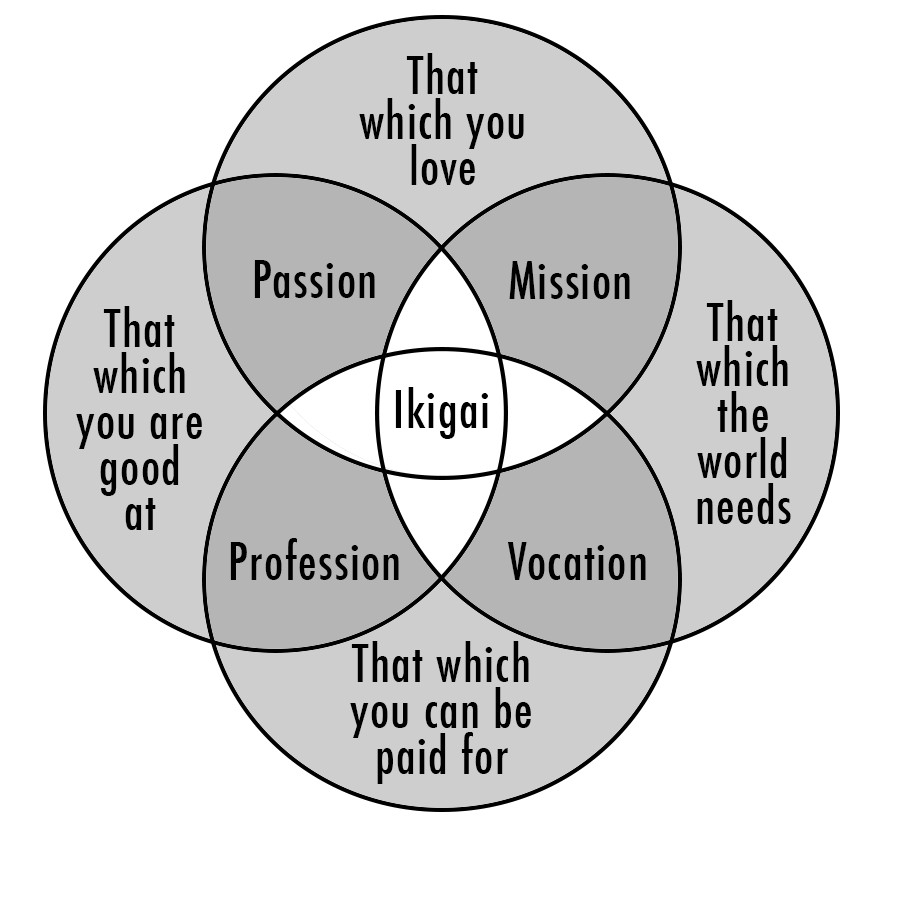
Source: Winn, Marc. Ikigai Venn Diagram. What’s Your Ikigai?, The View Inside Me, May 14, 2014
However, as Chris has shared, this visualisation, while popular online, is fundamentally misleading and has nothing to do with the authentic Japanese concept of ikigai.
So, what does ikigai truly mean? It is a deeply personal, everyday feeling of “living a life that is worth living.” It isn’t a destination; rather, it’s a sense of fulfilment grounded in your daily life that makes it feel meaningful and worthwhile.
According to research by Mieko Kamiya, who is known as the mother of ikigai, there are seven needs that must be met to experience ikigai-kan (the feeling of a life worth living). Among them, life satisfaction plays a major role. This comes not only from little joys, new activities, and comfort, but also, more importantly, from ganbari: effortful experiences or challenges that foster self-improvement and a sense of achievement. And that, I feel, is the part of ikigai that no one really talks about.
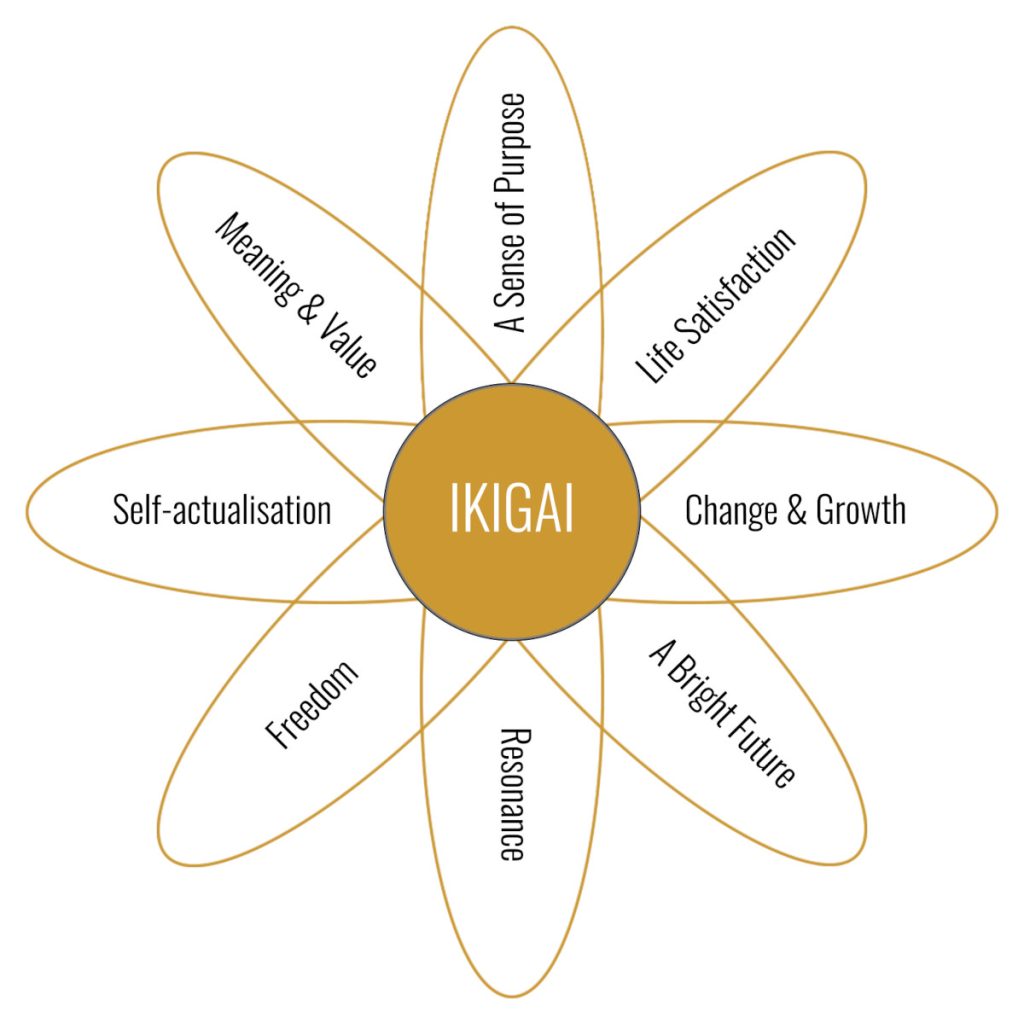
Source: Ikigai Tribe
Ganbari: The Struggle Worth Having
Ganbari is a Japanese word that roughly means perseverance, grit, or the willingness to struggle on. But it’s not just about enduring hardship for the sake of it. It’s about choosing which struggles are worth carrying and finding meaning in the effort itself.
In other words, ikigai is not only about discovering what lights you up. It’s also about discovering what you’re willing to struggle for. Love and passion might spark the journey, but it is ganbari that sustains it when things get difficult.
A career, a calling, or even a personal purpose will always have moments of frustration, sacrifice, and doubt. Without ganbari, even the most “perfect” ikigai will crumble.
The Quiet Truth About Ikigai
Here’s the truth few people talk about: your ikigai doesn’t have to be crystal clear from the start. Sometimes, it begins with a simple choice, that this is worth struggling for.
The struggles themselves give shape and weight to your ikigai. They are often anchored in your values and beliefs. And, often, when you look back, it is in the very moments of perseverance that your ikigai becomes clearest.
My Own Ganbari
For me, the idea of ganbari resonates deeply because there are many things I struggle with.
To share a bit about myself, I’m somewhat of a perfectionist, which can often work against me. Quite often, I lack courage because I’m afraid of failure, and I don’t always feel confident dealing with unexpected issues. In other words, I’m not naturally a risk-taker.
I also wrestle with doubts about not being good enough, as an adviser to clients, in the projects I deliver, as a team leader, and even in my roles at home. These thoughts are often on my mind.
On top of that, I’m an introvert. Many people today find it hard to believe, but it’s true. Early in my career, I avoided speaking to people I didn’t know well. I had social anxiety. I struggled with public speaking, and in networking situations I often froze. One time, I completely blanked out when a camera was suddenly put in my face at an opening event, and I probably muttered something that made no sense.
And yet, these are the very areas I’ve chosen to struggle in, to step into discomfort, because they are worth it.
My First Big Ikigai Decision
Given my fear of failure and risk-aversion, one of the biggest ikigai decisions of my life was leaving Singapore Airlines (SIA) to join Providend more than five years ago.
At SIA, I had stability, comfort, and a clear career path. For someone like me, who prefers security, it could easily have been my lifelong career.
But leaving that comfort meant stepping into the unknown. What if I wasn’t good enough? What if I didn’t like the work? What if I couldn’t support my family? What if I didn’t fit in? On top of that, my introverted self had to face a new role that required speaking to people almost every day and giving talks.
What I’ve Learned
Looking back, I realise those very struggles and failures were also the periods when I grew the most.
I learned that beginnings are always the hardest, but if we persevere, things become easier and more rewarding over time. I learned that struggles give success its meaning. And I’ve come to see that the things I am most proud of today are precisely the ones I had to fight hardest to overcome, because they were worth struggling for.
Ganbari Today
It has been more than five years since I made that leap, and many of the fears I had are no longer there. But those have been replaced with new uncertainties, challenges, and doubts, and I’ve come to accept that.
A client once asked me if work life is easier now, having left SIA to pursue my purpose. My immediate answer was: not at all. At Providend, we often describe ourselves as having a strong corporate family culture. But behind that culture are also values that constantly push us forward: maintaining high standards, pursuing excellence, and doing right by our clients.
That means frequent changes, new processes, new people, and plenty of uncertainty. Why do we keep putting ourselves through this? Because we know these are struggles worth having. And, in the end, they shape us, and our ikigai.
These are not glamorous struggles. They are often quiet, daily choices. But they are ours, and they give meaning to our work and our lives.
Closing Thought
Ikigai is often portrayed as a destination, a perfect alignment waiting to be discovered. But perhaps it is more like a journey, one that asks of us: What are you willing to struggle for?
Because, at the end of the day, it is in our struggles, our ganbari, that our ikigai is truly forged.
If these insights have sparked a step towards your ikigai, I would be glad to hear from you.
This is an original article written by Tan Chin Yu, Lead of Advisory Team at Providend, the first fee-only wealth advisory firm in Southeast Asia and a leading wealth advisory firm in Asia.
For more related resources, check out:
1. Finding Your Ikigai For A Life That Is Worth Living
2. Discovering Your “Ikigai” with Providend’s Philosophy
3. Here’s Why We Charge a Higher Fee Than Robos
With a purpose-driven approach towards wealth management, we believe that your life decisions should come first. Learn more about our wealth management solutions here.
Through deep conversations with our advisers, you will gain clarity on what matters most in life and what needs to be done to live a good life, both financially and non-financially.
We do not charge a fee at the first consultation meeting. If you would like an honest second opinion on your current investment portfolio, financial and/or retirement plan, make an appointment with us today.